Since the happenings in my own garden are becoming less humorous as I start to take myself a little more seriously and (I hope) make fewer hilarious, glaring errors, I have decided to open up the purview of my blog a little bit. I realize I have already done this in some posts, but expect it more and more.
In light of that decision, here are some wise words that Hannah forwarded to me from our farmer, Allan (who grows our CSA shares).
"POTATOES: We had a thunder storm during harvest. Your spuds may have
been bagged WET. This means you need to IMMEDIATELY get them out of
the plastic bag and wash them and then let them dry in the air (or
then cook them!) If you don't, they will ROT really fast!
LETTUCE: We have had almost continually rain and little sunshine for
two weeks. This week's lettuce is showing the results of this. You'll
have to preen it for good leaves. All of our lettuce is for one week
of shares, this is what we have this week.
SHARE SHOULD BE
Potatoes
Salad Mix
Lettuce
Kohlrabi (that 'green vegetable' no one can identify!)
onions
garlic
cucumbers
squash
basil (pesto freezes very well, but you have to leave out the oil...or
is it the garlic? You better check!)"
For those of you readers in the mid-Atlantic region, I'd be remiss not to link you to his site: http://www.freshandlocalcsa.com/
I include this because I always find his missives interesting both because of the description of the delicious food we can expect and because I like knowing about the challenges they face from the weather, etc. to get this food grown. He also often includes recipes, which is pretty helpful.
I will point out that I was not one of the suckers who paid for purslane. I pull that tricky weed out of my garden in abundance for free. And when I do, I try to eat it instead of discarding it because I have read many places that its healthful goodness is epic. And it tastes pretty nice, too.
Thursday, July 10, 2008

Mystery Cucumber
I got my first cucumber!
Unfortunately, it was one of the standard old green kinds; my weirdo, heirloom lemon-shaped-and-colored cucumbers are still all in the flower stage. I titled this post "mystery cucumber" because the circumstances of this cucumber were a little mystifying to me. I was just tromping around my garden, trying to suppress the weeds growing up through my mulch by frowning at them, when I noticed a fully ripe, 8 inch long cucumber on one of my plants. That on its own wouldn't be weird, but then I looked around to see if there were any others, and there was nothing. A few flowers on this bush, no baby cucumbers yet...
Perhaps this particular bush was channeling all of its energy into this one cucumber. Maybe this is normal, I don't know. But I am now keeping a closer eye on all of my cucumber and squash plants, because who knows what other fruits have has escaped my notice during their entire childhood.
The other plants I think I am keeping better tabs on, though. My runner beans look quite nice climbing up their makeshift trellis-y thing and my tomato plants are staked, relatively happy looking, and flowering copiously. I also have a teeny tiny eggplant. I am worried, since it looks pretty ripe, that it is going to stay teeny tiny -- a product of a stunted plant, rather than just a fruit in its early stages. I started this plant indoors, and perhaps I did a poor job meeting its needs as I transplanted it. I hesitate to say that it's just an issue of soil fertility (although I readily admit that my soil is a serious work in progress) because the other plants in that area are doing much better. My pepper transplant is having the same tiny-ness issues in a different part of the garden, also surrounded by healthy looking plants. So for the time being I blame my poor skill at transplanting.
Monday, June 23, 2008
So I haven't actually gotten around to mulching...
Well, so only a little mulching has happened, even though I said that would be my next update.
There has, however, been some theft. It's ok, though, because I was doing the thieving; It wasn't really that serious. In one of the weeded-over sections of the garden some mint has gone crazy, crazy. So I took a whole bunch of it after I got done planting a few more herbs and pulling some greens and the last of the peas.
Then I looked up recipes for mint (other than the recipes involving rum, which I already knew). I found many things, most of which sounded weird/unappealing. In the end, I settled on a mint granita recipe from epicurious.com, and it was really awesome.
Here it is, for those of you who won't click a link:
2 cups water 1 cup chopped fresh mint leaves 1/2 cup sugar 2 tablespoons fresh lemon juice
Garnish: fresh mint leaves
Bring water, mint, and sugar to a boil in a 1- to 2-quart saucepan, stirring until sugar is dissolved, then reduce heat and simmer, uncovered, 3 minutes. Add lemon juice and pour through a fine-mesh sieve, pressing hard on solids and discarding them, then cool.
Freeze mixture in a 1 1/2- to 2-quart shallow nonreactive metal container, stirring and crushing lumps with a fork every 30 minutes, until evenly frozen, 2 to 3 hours. Scrape with a fork to lighten texture, crushing any lumps. Spoon into glasses or bowls.
I recommend it.Friday, June 20, 2008
I know, I know
It's been forever; It's true.
I have a boatload of excuses, of course. There was the dispiriting uncertainty about whether I'd get my plot back. Then there was the assurance that I would have it. Then I planted some things and some other gardener who didn't want to double dig requested that the WHOLE PLACE (including my obviously double-dug and partly planted plot) be roto-tilled. Then that whole plant then have it roto-tilled adventure happened again.
But all of this was weeks ago. In the ensuing weeks, I have planted some herbs, some squash, cucumbers, tomatoes and beans and a section for lettuces, greens, spring onions and root vegetables. Some of the snap peas that I planted right up close to the edge (in the hopes that they'd out-compete the mint) escaped the double roto-till and produced for a few weeks as well. I've also gotten a bumper crop of mustard greens (figures -- Alli hates them). I used a few of them in this mustard greens and fontina cheese fritatta yesterday, which she managed to choke down (the addition of eggs, cheese and garlic-y things will fix nearly any food).
We've also gotten some Easter-egg radishes, which are cute and pastel. We like to food process them in with equal parts butter and spread it on French bread. That's tasty; try it. They came up really fast! In fact, with the intermittent rainstorms, everything has been shooting up. Particularly the weeds. Effin' weeds.
Over the winter I had a rather short lived worm farm, (did I mention that?). And while I managed to commit worm genocide after a couple of months, they did make a nice amount of worm castings, which I have used as an early fertilizer for some of my more nutrient-hungry plants. Someday I'll re-start that worm operation, but it was just so sad. I left for a weekend thinking they were fed and taken care of for a couple of days (I mean, they're worms, not a puppy) and came home and they had all fled their habitat: Into the dry, inhospitable cardboard box around it. This is the equivalent of thinking that it's a little warm on the beach and so you walk headfirst into the ocean and drown yourself. Again, though, they're worms, and therefor not known for their enlightened self interest.
I'll get back on posting, and return with some photos shortly. I promise to keep you all apprised of any particularly creative/stupid decisions I decide to make. We are also receiving a weekly CSA share (mentioned previously) now, and I'll let you know of interesting things we get from that. For starters, there were garlic scapes. So far we have both cooked them like green beans then served them with a lemon-vinaigrette, and blended them into a dip with white beans which ends up pea-colored. Hannah suggests using them in soups and with potatoes.
I will update you guys when I finally mulch.
Thursday, February 28, 2008
getting antsy
It's nearly time to start planting!!
In fact, I should have started a few things indoors already (eggplants, peppers). I'll get on that this weekend. I promise.
In fact, I should have started a few things indoors already (eggplants, peppers). I'll get on that this weekend. I promise.
Wednesday, February 27, 2008
A little inspiration
Here's a link to a youtube video about turning hyper-arid, perfectly flat and extremely salty land a few miles from the Dead Sea into a productive multi-crop orchard. These guys use permaculture principles which focus on mimicking the resiliency and productivity of natural systems but recreating them with species that are not only useful to the system but also edible or otherwise useful to humans.
An ideal permaculture system requires minimal upkeep and uses perennial and self-seeding plants to keep itself going even if left unattended for months or years at a time. Interesting stuff, and more on this later.
An ideal permaculture system requires minimal upkeep and uses perennial and self-seeding plants to keep itself going even if left unattended for months or years at a time. Interesting stuff, and more on this later.
Compost!
So I visited my dad in Phoenix, AZ last weekend. It was a ton of fun. There's been such a wet winter there that the landscape was so green it was nearly unrecognizable in places. We did a lot of fun things, but in my free moments I started a very pathetic beginning to a compost pile in my dad's back yard.
The main ingredient was the leaves that lay scattered all about below his tree. Alli and I raked them all to an auspicious location near the side fence and put them in a big old pile. I intended to have my brother help me pilfer some wooden loading pallets like you can find behind supermarkets to use for walls for the pile, but there was never time.
Alli and I were cooking a meal for many people on Sunday night and since we went to a farmer's market and found a ton of fresh vegetables there was a fair amount of vegetable scrap to throw on the pile (I just can't get others to share my taste for beet greens. Odd).
Since I doubt dad will produce copious amounts of vegetable waste to add to the pile, I was a little worried that the pile would be too leafy. On the other hand, he does drink a lot of coffee. And the coffee shop he frequents every day has a policy of giving away their coffee grounds to composters. My dad is a serious early bird, so I think he'll have no trouble taking advantage of this resource.
I sent him a link to City Farmer's photo-illustrated how to on composting since I didn't have time to really go through the process while I was there.
There's the link, if you want to give compost a try yourself. Drop me a line and I'll talk until I'm out of breath about all of the benefits.
I hope we all realize ...
I haven't preached this point too much so far because I figured it went without saying, but permit me a (hopefully) short rant.
Nearly all of the the food that we buy -- and then eat -- relies on cheap gasoline, cheap trucking and other non-renewable resources that we're sucking down by the ten thousands of gallons. Go to a grocery store, even a high-cost organic one and look around. Everything there would be gone with something as simple as a three-day transit strike.
Does no one else find that terrifying? And on a less catastrophic scale, rising oil prices (which are and will continue to be an absolute reality) will by necessity equal rising food prices. Maybe you've got pounds and pounds of food stored up in your house, but my apartment, not so much. Maybe the trucking companies will come through for us before oil costs are prohibitively expensive and run their trucks on biodiesel, or something.
Personally, while I think these more optimistic scenarios could certainly play out, I'm not willing to bet my starvation on it. I don't think you should either, to be honest.
So some solutions, please, miss gloom'n'doom?
Well, the most obvious and most direct answer is to grow some of your own food, more each year (pick your damn figs, oranges and pecans, dad. Get some wrist and ankle weights and do it instead of a workout or two. And then call Alli and she'll walk you through cooking delicious things from them). Don't have enough space? Get creative, vertical space is space too.
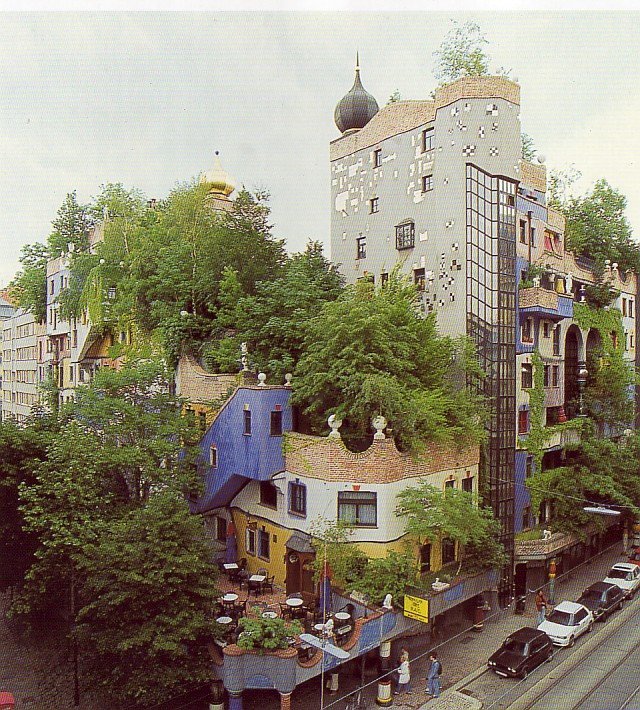
You'd be surprised how productive a small amount of land (or a balcony, or a patio, or a rooftop) can be . There's an Urban farm in Chicago (note: short mid-western growing season) that can produce enough food for 2000 people on two acres. Well, that's an advanced aquaponics system with a lot of full time employees, but then you're probably not trying to feed 250 people from your 1/4th acre, either.
Another answer that doesn't involve you digging in the dirt is to join a CSA. Community supported agriculture has you pay up front for a "share" of the produce from a farm over the course of the season. There are usually several drop off points to pick up your share, or some CSAs deliver to your door. There's a searchable and pretty comprehensive list of CSAs at localharvest.org.
This answer helps the small farmers by giving them money to cover their overhead expenses, and gives you the best produce available. There are countless other advantages, like the accountability that exists when you meet and establish a relationship with your food producer and the support of a local food economy. Let's say that transit strike does materialize: your CSA share is safe. And the rising oil prices probably won't affect it too much, either, because small local farms running CSA's are typically organic, thus not needing petroleum based fertilizers and pesticides and the local nature of the food exempts it from rising shipping costs.
(I have skimmed over the obvious environmental implications of shipping all of that food long distances in refrigerated trucks and train cars because all 12 of my readers are very bright and have almost certainly made that connection on their own.)
Nearly all of the the food that we buy -- and then eat -- relies on cheap gasoline, cheap trucking and other non-renewable resources that we're sucking down by the ten thousands of gallons. Go to a grocery store, even a high-cost organic one and look around. Everything there would be gone with something as simple as a three-day transit strike.
Does no one else find that terrifying? And on a less catastrophic scale, rising oil prices (which are and will continue to be an absolute reality) will by necessity equal rising food prices. Maybe you've got pounds and pounds of food stored up in your house, but my apartment, not so much. Maybe the trucking companies will come through for us before oil costs are prohibitively expensive and run their trucks on biodiesel, or something.
Personally, while I think these more optimistic scenarios could certainly play out, I'm not willing to bet my starvation on it. I don't think you should either, to be honest.
So some solutions, please, miss gloom'n'doom?
Well, the most obvious and most direct answer is to grow some of your own food, more each year (pick your damn figs, oranges and pecans, dad. Get some wrist and ankle weights and do it instead of a workout or two. And then call Alli and she'll walk you through cooking delicious things from them). Don't have enough space? Get creative, vertical space is space too.
You'd be surprised how productive a small amount of land (or a balcony, or a patio, or a rooftop) can be . There's an Urban farm in Chicago (note: short mid-western growing season) that can produce enough food for 2000 people on two acres. Well, that's an advanced aquaponics system with a lot of full time employees, but then you're probably not trying to feed 250 people from your 1/4th acre, either.
Another answer that doesn't involve you digging in the dirt is to join a CSA. Community supported agriculture has you pay up front for a "share" of the produce from a farm over the course of the season. There are usually several drop off points to pick up your share, or some CSAs deliver to your door. There's a searchable and pretty comprehensive list of CSAs at localharvest.org.
This answer helps the small farmers by giving them money to cover their overhead expenses, and gives you the best produce available. There are countless other advantages, like the accountability that exists when you meet and establish a relationship with your food producer and the support of a local food economy. Let's say that transit strike does materialize: your CSA share is safe. And the rising oil prices probably won't affect it too much, either, because small local farms running CSA's are typically organic, thus not needing petroleum based fertilizers and pesticides and the local nature of the food exempts it from rising shipping costs.
(I have skimmed over the obvious environmental implications of shipping all of that food long distances in refrigerated trucks and train cars because all 12 of my readers are very bright and have almost certainly made that connection on their own.)
Wednesday, February 13, 2008
Another link
Yup, it's about urine.
Human urine as a safe, inexpensive fertilizer for food crops
That's the headline. It summarizes a study done by some Finish researchers.Some interesting things
Heya.
So here's a link to the website of a Canadian (of course; they're way ahead of us in innovative ag) couple who figured out a way to profit $52,000 on the sales of crops from less than an acre of farmed land. About half an acre, in fact. And they only own about a 5th of it. And the rest? Back yards in their neighborhood. In some cases they rent the space to farm from neighbors and usually pay for the space in produce and in others they're actually paid to farm other people's property. As people start to realize the nonsense of lawns, some families have seen this "SPIN Farming" (stands for Small Plot INtensive farming) as an alternative to landscaping costs.
Their profitability key is to use high value crops like salad mixes, micro-greens and specialty beets all of which can be harvested very young and spaced very tightly. So they get several harvests from a small space all of which are quite valuable; especially since they weigh and package them at home, charging per bunch instead of per pound.
Speaking of the evil of lawns: heard of edible estates? I'd link to its website, but it's sort of a disorganized mess. Basically this guy started this project to teach people how to use edible plants in a front-lawn-replacing landscape. If done correctly it reduces water need and certainly pesticide and herbicide need and also produces something useful, unlike lawns, which produce nothing but neighborhood homogeneity and cover thousands of square miles of America.
Tuesday, February 5, 2008
Speaking of the horticultural applications of pee...
But not my pee this time. I'm talking about the rather intriguing idea of aquaponics.
Aquaculture is the practice of growing fish as a cash crop.
Hydroponics is the practice of growing plants in a medium other than soil using a nutrient solution to provide them with the elements they'd usually pull from the soil.
Each of these practices on its own produces a harmful by-product. In aquaculture it's all the fish sewage. In hydroponics the nutrient solution is often not completely utilized and it's an expensive sometimes chemically intensive input.
Aquaponics combines the two systems to mimic a more natural polyculture where the plants clean the water and the fish provide the nutrients. In a perfectly functioning aquaponics system the only inputs are fish food, water to top off from evaporation and a minimal amount of electricity to run the pumps that circulate the water from fish to plants and back. I've seen these run from solar cells housed above the unit.
Tilapia is a common fish grown in this setup, since they're tolerant of a lot of conditions and can be fed table scraps (but they're vegetarians. awww). It's sort of like worm composting, but with fish. Feed them your scraps, scraps avoid waste stream, fish make "waste" into plant nutrients, plants make it back into human nutrients. Cool. I love neat, clean, all tied up in a pretty package ideas like this.
I realize, of course, that a perfectly functioning system is by no means an easy feat. One home experimenter wrote that hobby aquaponics is a good way to become a serial fish-killer until you get it right. Still, this whole thing makes me want a yard/greenhouse/place to experiment/even a big balcony really badly. And it's making Alli nervous that we may someday be that crazy house on the block with all sorts of abandoned experiments and lengths of plastic tubing in the back yard.
It's not my fault; I was born with an inherent need to tinker with things.
Oh and here's a link to a video of a home-made aquaponics system.
Pee!?!?
I figure my long gap between posts is merited, since it's winter, and all my garden was doing was decomposing the organic matter that I piled there. I took my straw mulch and put it in a pile, and added some leaves and some kitchen scraps and hoped for compost.
I knew that this was mostly an unrealistic hope, given the low outdoor temperatures and the low levels of nitrogen in the mix. Finally, I decided that the pile just had to have a nitrogen boost. I searched around all the forums and various other resources that I frequent before I resort to trial and error, and found many suggestions for adding nitrogen. Some were good suggestions, but expensive. Some required that I own a 50 gallon aquarium.
I settled on the easiest and cheapest nitrogen boost, one much touted in every forum I looked at, after I did some research on its safety. I'll give you a hint, it involved a wide mouthed empty plastic jar and we flushed the toilet way less frequently. Human urine, as it turns out, is very high in nitrogen.
I also recently found this gem, an article on organic container gardening adapted to the slums of Mexico City, which relies heavily on urine use. Very interesting.
Friday, November 2, 2007
Garden in late October
Just after the first frost, I decided it was time to pull all of my lettuces. They were holding up quite well, but the weather is supposed to take a colder turn very soon. So on Monday Alli and her friend Tim and I pulled up all the arugula and mustard greens. I picked out the damaged leaves and we made a big salad for all four of us who ate dinner at home that night and still had a ton left over.
So it's been salad week, over here, and the only thing left in my garden is some beets, that feral mint and the decomposing hay mulch. The hay is much larger in quantity than the last time I noted it, because I bought a big bale of it when Alli, Brynne and I went to a farm selling pumpkins (and also cider, cheeses and hay, among other things). You should have seen Alli trying to wrestle that hay into the back of her perennially pristine car trunk. There's no better way to say "I love you."
So it's been salad week, over here, and the only thing left in my garden is some beets, that feral mint and the decomposing hay mulch. The hay is much larger in quantity than the last time I noted it, because I bought a big bale of it when Alli, Brynne and I went to a farm selling pumpkins (and also cider, cheeses and hay, among other things). You should have seen Alli trying to wrestle that hay into the back of her perennially pristine car trunk. There's no better way to say "I love you."
Been a while
So I have gone quite a while without an update. And quite a few things have happened since I last posted.
We finally got some much needed rain around here, which all came at once and preceded the first frost by only a few days. And it's still a very dry year.
Hannah and I went apple picking, oh ages ago now. My garden is one part of my general eating locally and seasonally efforts and I've decided to include a few others from time to time. So we went apple picking. We each bought an absurd quantity of apples (about 25 pounds?) and I also got a lot of winter squash. When you re trying to eat seasonal and local there are times of year where you just have to make your peace with apples and squash. We've been able to supplement these things with the greens, root vegetables and late tomatoes from my garden and our experiments in bread making.
If you were to look in my refrigerator and freezer for a while there (and also now) you'd find a plethora of squash and pumpkin soups and homemade apple sauce. Alli can cut up apples REALLY FAST as I learned while I was trying to peel them and keep up with her when we were loading our crock pot for the applesauce. It was a truly delicious applesauce but all those apples and apples products went surprisingly fast.
Friday, October 5, 2007
Sage
So sage dries out FAST. I'll try to put a picture up, but it's already starting to look like the silver-gray dried bunches available at head shops and Native American museums. It's pretty cool.
Of course, it's also shedding onto the ground a little and that is crunchy underfoot and obnoxious, but oh well.
Of course, it's also shedding onto the ground a little and that is crunchy underfoot and obnoxious, but oh well.
Thursday, October 4, 2007
Speaking of making sauce
Two of the plants in my garden that already looked like they were starting to feel the hurt from the cold weather were my basil and pineapple sage. The sage is now hanging to dry in front of a window, from the adjustment wire of our blinds. We'll use the dried sage as a cooking herb, or burn it to purify the house, or something. or maybe it will just hang out in a vase and look and smell pretty. Maybe I'll embed it into fancy homemade candles (this last option is unlikely). Regardless, we will find a use for it.
A good use for the basil was pretty obvious. We made pesto. The other pieces of the equation (olive oil, nuts, salt, garlic) already exist in our kitchen in quantity, so we just pulled all the basil leaves off the main stem, piled/poured everything into Baum's extremely cool blender and hit "liquefy".
It turned out quite well - as things loaded with garlic, olive oil and salt tend to do.

The season's winding down...
So we are a mere two weeks or so from the projected first plant-killing frost. It seems tough to believe, since it's still often sweltering during the day. Not to mention the fact that I no longer have school in the fall to structure my time, so this year has lacked a normal sense of transition.
Well, with a plant killing frost coming up and my tomato plants still producing, my lettuces still still growing and my turnips still turniping, what am I going to do?
At my home we're transitioning from production mode to consumption mode, fast. Sick of arugula? Tough. Eat it.
I avoided space-consuming vine plats in my fall garden, like winter squashes and pumpkins, for various reasons and the result has been: lots of lettuce. And root vegetables. What am i going to do with all these radishes and turnips? The package was serious when it said radishes were easy to grow. They are running amok. The root vegetables, at least, will keep for a while. We'll have carrots, beets, turnips and radishes coming out of our ears for at least part of the winter.
No matter how many tomatoes become ripe, we manage to polish those off pretty quickly. There is the possibility, though, of having to pick a great deal of them all at once to outsmart the weather a little. In that case, I guess we'll make sauce and freeze it to have later.
Thursday, September 27, 2007
I know what I said, but...
So I know I promised that this wouldn't be one of those blogs where I was like "hey check out all my successes!"
And trust me, I did every idiot thing in my power to ensure that I had no successes.
But I just can't resist....
HEY CHECK OUT ALL THIS STUFF I GREW.

There's a misshapen radish, a tiny turnip that spit itself out of the dirt (I swear) while it was still all tiny, some various greens, carrots and a bunch of cherry tomatoes. The growing season is winding down, but I'm finally able to head out there a few times a week and bring in some seriously good stuff.
Tuesday, September 18, 2007
Mulching: finally happened
So after a whole lot of talk, I finally mulched. Yeah, I know, I didn't think it would happen either.
I was able to procure two extremely compressed cubic feet of "salt hay substitute." Well since "sugar substitute" can mean "scary white powder more closely related to a micro-fleece sweater than actual sugar" and "butter substitute" can actually mean"yellow, salty motor oil" I took the time to check what exactly I was using instead of hay. Well, it's just hay and straw - the pieces less inclined to have a bunch of weed seeds hiding in them. That I can go for.
The two cubic feet ended up being a whole lot of mulch. I was able to easily cover the entire non-planted area of my garden - between plants and rows, edges, etc. Since I'm hoping that all this mulch will, in addition to mulching my existing plants, compost into soil-enriching humus (decomposed organic matter in dirt, not a tasty chickpea and tahini-based dip) I also found a micro-organism rich, all natural bio accelerator to kick start that decomposition process. Now, i have heard about the high temperatures that can be produced be decomposition processes, so I did not use the bio accelerator on parts of my garden where I have things planted. Yet.
I'll tell you where I did use it, though: on top of all the mint. So, long before my tenure in this community garden plot, someone planted mint (as my 4 regular readers know) and it just runs amok. I have kept pulling it out, with increasing ferocity and less worry that it will not be able to regenerate itself. This time I pulled out every scrap I could find, by the roots, covered the bare area in mulch and compost starter and stomped on it a few dozen times for good measure. I have no doubt that as I write this, 20 hours later, the mint is back and better than ever. I also have no doubt that I looked as if I had lost my mind, jumping up and down on a little corner or hay covered dirt.
I knew that I have waited far too long to apply mulch between my plants and I also know that I did a pretty poor job. But until I see the negative results of my efforts, I won't change my ways. I'm still that little kid who must put my own hand on the stove, despite everyone else's tales about stoves being HOT. For instance, my method for mulching between tomato plants, which are all overgrown and form quite a canopy, was to pile the mulch on the canopy and shake the branches around until it fell through. Genius, right?
Speaking of tomato plants, I have seen the stems and vines of tomato plants described as "delicate as childs' wrists" or something like that. Well, that is a nice image, but I must be doing something wrong (we knew that) because my tomato plants are WAY more delicate than the wrists of children. They are tiny. Like the wrists of ... some sort of diminutive marsupial. Or something.
Monday, September 10, 2007

Subscribe to:
Posts (Atom)